Best Books on InvestingBest Books on Wealth BuildingBest Books on EconomicsBest Books on Personal Finance
Part of Best Books on Economics →
Curated Reading on Money, Wealth & Economics

The best books to actually understand inflation and the Fed

Interest rate decisions move mortgage payments, stock valuations, and job markets, yet most explanations of how the Federal Reserve actually works stop at "they set interest rates." These five go further — what the Fed is, why it has the power it has, and what happens when central bankers get inflation wrong in either direction.

Curated by Capital Readers — updated monthly with the titles worth your time.
Compiled by Capital Readers Team — researched and curated from published reviews, reader consensus, and AI-assisted analysis
Rankings are researched and reviewed before publishing. How we choose books →
Last updated

Understanding Inflation & the Fed

The 5 books that explain what the Fed actually does

From a plain primer by a former Fed chairman to the deep history of how central banking power got built in the first place — read roughly in this order.

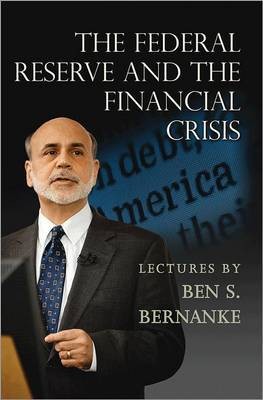
Cover of The Federal Reserve and the Financial Crisis by Ben S. Bernanke

The Federal Reserve and the Financial Crisis

by Ben S. Bernanke · 2013

Four public lectures given by the Fed chairman who steered it through 2008, covering the Fed's origins, its dual mandate, and why it exists at all before getting into the crisis specifically. Shorter and plainer than almost anything else written about central banking.

Core idea
The Fed was created to prevent bank panics, and its later mandate to manage inflation and employment grew out of that original, narrower purpose.
Read it if
You want the fastest, most direct answer to "what does the Fed actually do."
Skip it if
You want a skeptical or outside perspective — this is the Fed's own former chairman explaining the Fed.
Buy on AmazonBookshop.orgPaperback · Kindle
Cover of Secrets of the Temple by William Greider

Secrets of the Temple

by William Greider · 1987

A dense, deeply reported history of how the Federal Reserve accumulated the power it has — deliberately insulated from electoral politics, and answerable to almost no one on a week-to-week basis. Long, but the definitive account of the institution's actual structure.

Core idea
The Fed's independence from elected government is a deliberate design choice with real democratic costs, not a neutral technical arrangement.
Read it if
You want the structural, skeptical account of who the Fed actually answers to.
Skip it if
You want something current — this is 1980s reporting, strongest on structure and history rather than recent policy.
Buy on AmazonBookshop.orgPaperback · Kindle
Cover of Lords of Finance by Liaquat Ahamed

Lords of Finance

by Liaquat Ahamed · 2009

The Pulitzer Prize-winning account of four central bankers whose decisions in the 1920s — defending the gold standard past the point it made sense — helped turn a recession into the Great Depression. Reads like narrative history, not a policy paper.

Core idea
Central bankers defending an outdated rule (the gold standard) turned a manageable downturn into a global depression — proof that monetary mistakes compound.
Read it if
You want the stakes made concrete through history rather than explained in the abstract.
Skip it if
You want current policy — this is entirely about the interwar period.
Buy on AmazonBookshop.orgPaperback · Kindle · Audiobook

The Alchemists

by Neil Irwin · 2013

The 2008 crisis told through the three central bankers who had to improvise a response in real time — the Fed's Bernanke, the Bank of England's Mervyn King, and the ECB's Jean-Claude Trichet. The most readable, contemporary entry on this list.

Core idea
Central banks improvised most of their 2008 crisis response — the playbook was written during the crisis, not before it.
Read it if
You want the most recent, most narrative account of central banking under real pressure.
Skip it if
You've already read extensively about the 2008 crisis — the ground here is well covered elsewhere too.
Buy on AmazonBookshop.orgHardcover · Paperback · Kindle

The Price of Time

by Edward Chancellor · 2022

A history of interest rates themselves, from ancient Mesopotamia to the era of near-zero rates after 2008 — the most analytical book on this list, and an argument that suppressing the price of money for too long has consequences central bankers underweight.

Core idea
Interest rates are the price of time itself, and holding that price artificially low for too long distorts an economy in ways that take years to surface.
Read it if
You've read the other four and want the deepest single-topic treatment of the Fed's main tool.
Skip it if
This is your first book on the subject — start with Bernanke or Ahamed instead.
Buy on AmazonBookshop.orgHardcover · Kindle · Audiobook
“Inflation is the one form of taxation that can be imposed without legislation.”
— Milton Friedman
How this list was made

Why these five, in this order

Bernanke opens the list because nobody explains the Fed's basic mechanics more plainly than the person who ran it through 2008 — the book began as four public lectures, and it reads like one. Greider follows with the deeper, more skeptical history of how the Fed accumulated the power Bernanke describes using, and who actually answers to whom. Ahamed then supplies the cautionary tale: four central bankers whose decisions in the 1920s helped produce the Depression, proving the stakes are not abstract. Irwin brings the same dynamic into 2008, when three different central banks improvised a response in real time. Chancellor closes the list as the most analytical entry, tracing interest rates themselves — the Fed's primary tool — across centuries of financial history.

What's the single fastest way to understand what the Fed does?

Bernanke's lectures. It's short, written for a general audience despite the author, and covers the origin and basic function of the Fed before getting into 2008 specifically.

Is The Creature from Jekyll Island worth reading instead?

We left it off deliberately. Its history of the Fed's founding is popular, but mainstream economic historians dispute several of its central claims, and it blurs into conspiracy territory in places. Greider's book covers similar ground on the Fed's power and origins without that problem.

Do I need an economics background for these?

No for Bernanke, Greider, Ahamed, and Irwin — all four are written for general readers. Chancellor's book on interest rate history is denser and rewards having read at least one of the other four first.

How does this connect to your main economics list?

Manias, Panics, and Crashes and This Time Is Different both cover related territory at a higher level — crises and cycles broadly, not the Fed specifically. Read this list when you want the institution itself explained, not just the pattern of what it responds to.
More Reading Lists

View All Lists →

One list. One book. Every two weeks.

A short, opinionated email — no filler, no fifty-book roundups. Just what's worth reading next.

As an Amazon Associate and Bookshop.org affiliate, we earn from qualifying purchases.