Best Books on InvestingBest Books on Wealth BuildingBest Books on EconomicsBest Books on Personal Finance
Curated Reading on Money, Wealth & Economics

The best books on personal finance, for readers building a system that runs on its own

Not every money problem is about debt or investing — most of it is the everyday system: how many accounts you have, how much you save, and how much of it happens automatically. These five build that system, from a single habit to a full account structure.

Curated by Capital Readers — updated monthly with the titles worth your time.
Compiled by Capital Readers Team — researched and curated from published reviews, reader consensus, and AI-assisted analysis
Rankings are researched and reviewed before publishing. How we choose books →
Last updated

Best Books on Personal Finance

The 5 personal finance books to build your system around

Start here if your finances work but your system doesn't — before a specific problem like debt sends you to a narrower list.

Cover of The Index Card by Helaine Olen & Harold Pollack

The Index Card

by Helaine Olen & Harold Pollack · 2016

Built from a dare: that nearly all trustworthy personal finance advice fits on one index card. Short, openly skeptical of the financial advice industry, and the fastest way to see the shape of the whole subject before going deeper.

Core idea
Most of what the financial industry sells as complexity is unnecessary; a handful of rules covers almost every situation.
Read it if
You want the shortest, most skeptical book on this list.
Skip it if
You want depth on any single topic — it's deliberately a survey.
Buy on AmazonPaperback · Kindle · Audiobook
Cover of The Automatic Millionaire by David Bach

The Automatic Millionaire

by David Bach · 2003

One idea, repeated with conviction: pay yourself first, automatically, before you ever see the money. The mechanics of setting it up matter more here than the motivational framing around them.

Core idea
Automate savings before you ever see the money, and building wealth stops requiring willpower.
Read it if
You want one simple mechanical system rather than a philosophy to follow.
Skip it if
You already automate your savings — the book has one idea, repeated.
Buy on AmazonPaperback · Kindle · Audiobook
Cover of The Barefoot Investor by Scott Pape

The Barefoot Investor

by Scott Pape · 2017

A literal bucket system — named accounts for spending, savings, and splurging, each fed by a standing order. Turns budgeting into a setup task you do once rather than a discipline you maintain every month.

Core idea
A small number of separate accounts with automatic transfers removes the need to budget from memory or willpower.
Read it if
You want a week-by-week setup checklist, not a philosophy.
Skip it if
You're outside Australia — the account structure travels, the tax and banking specifics don't.
Buy on AmazonPaperback · Kindle · Audiobook
Cover of MONEY Master the Game by Tony Robbins

MONEY Master the Game

by Tony Robbins · 2014

Interviews with a roster of top investors, distilled into a plan for readers who aren't professionals. Long and occasionally repetitive, but the chapters on fees are the most quietly useful thing in the book.

Core idea
Fees compound against you as relentlessly as returns compound for you — minimizing them is one of the highest-leverage decisions an investor controls.
Read it if
You want the collected wisdom of several top investors condensed into one plan.
Skip it if
You want brevity — this is the longest book on the list by a wide margin.
Buy on AmazonHardcover · Paperback · Kindle · Audiobook
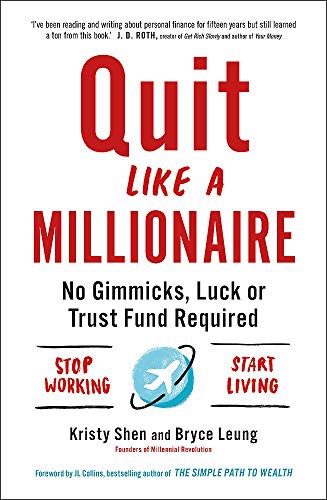
Cover of Quit Like a Millionaire by Kristy Shen & Bryce Leung

Quit Like a Millionaire

by Kristy Shen & Bryce Leung · 2019

A financial-independence story built on aggressive saving and index investing, notable for tackling the harder half of the problem most books skip: how to safely spend down a portfolio once you've built one.

Core idea
A portfolio built to be spent from needs a different design than one built only to grow.
Read it if
You're optimizing toward financial independence, not just general saving.
Skip it if
You want moderate lifestyle advice — the frugality on display is extreme by design.
Buy on AmazonPaperback · Kindle · Audiobook
“The best personal finance system is the one that requires you to make a decision exactly once.”
— Capital Readers, Editorial Note
How this list was made

Why these five, and why general before specific

This hub is deliberately about systems, not problems — the account structure and the automated habit everything else sits on top of. Olen and Pollack open the list because their claim, that almost all trustworthy advice fits on an index card, is the fastest way to see the shape of the whole subject. Bach and Pape follow with two different mechanical answers to the same question: how you make saving happen without deciding to, every time. Robbins is the outlier — denser and investing-heavy — included because its fee-awareness chapters change behaviour the other four don't touch. Shen and Leung close the list because their book assumes the system already works and asks the harder question of how to spend from it. Readers dealing with an existing balance should start at Getting Out of Debt instead; this list assumes the immediate crisis is already handled.

Is this different from the debt list?

Yes. Getting Out of Debt is for an active balance you're clearing. This hub assumes that's handled and focuses on the ongoing system underneath it: accounts, automation, and habits.

Where should a complete beginner start?

The Index Card, then The Automatic Millionaire. Together they take about a week to read and cover most of what matters before you need anything more specific.

Do I need Money: Master the Game if I've already read the investing list?

Probably not in full. Its fee-awareness chapters are the most useful part if you've already read Malkiel or Housel; much of the rest overlaps with the investing list.

Is any of this advice, formally?

No. Everything here is a book review, not personalised financial advice, and none of these authors know your income, debts, or tax situation.

Explore This Topic Further

Back to This List →

More Reading Lists

View All Lists →

One list. One book. Every two weeks.

A short, opinionated email — no filler, no fifty-book roundups. Just what's worth reading next.

As an Amazon Associate and Bookshop.org affiliate, we earn from qualifying purchases.