Best Books on InvestingBest Books on Wealth BuildingBest Books on EconomicsBest Books on Personal Finance
Curated Reading on Money, Wealth & Economics

The best books on building wealth, for people past the basics

Wealth is built far more by behaviour than by returns. These are the books about the decisions that repeat — what you spend, what you keep, and how long you leave it alone.

Curated by Capital Readers — updated monthly with the titles worth your time.
Compiled by Capital Readers Team — researched and curated from published reviews, reader consensus, and AI-assisted analysis
Rankings are researched and reviewed before publishing. How we choose books →
Last updated

Best Books on Wealth Building

The 5 books on turning income into assets

For readers who already save something each month and want to know where it should go — and why most of the work is behavioural.

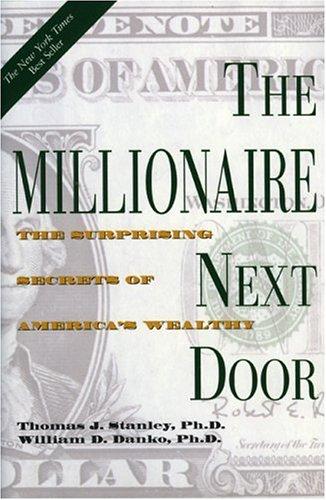
Cover of The Millionaire Next Door by Thomas J. Stanley & William D. Danko

The Millionaire Next Door

by Thomas J. Stanley & William D. Danko · 1996

A study of who is actually wealthy in America, and the answer is rarely who looks it. The data on income versus accumulated net worth reframes spending as the central variable.

Core idea
High income and high net worth are weakly correlated; consumption is the variable people underestimate.
Read it if
You earn well and cannot work out where it goes.
Skip it if
Dated examples irritate you more than data persuades you.
Buy on AmazonPaperback · Kindle · Audiobook
Cover of Your Money or Your Life by Vicki Robin & Joe Dominguez

Your Money or Your Life

by Vicki Robin & Joe Dominguez · 1992

The book that turned saving into a question about time rather than money: every purchase costs hours of your life. Its nine-step programme is the origin of most modern financial-independence writing.

Core idea
Convert every expense into hours worked, and spending decisions change on their own.
Read it if
You want a complete programme, not a set of principles.
Skip it if
You dislike tracking every transaction — the method depends on it.
Buy on AmazonPaperback · Kindle · Audiobook
Cover of The Richest Man in Babylon by George S. Clason

The Richest Man in Babylon

by George S. Clason · 1926

Parables from 1926 that reduce wealth building to a handful of rules — pay yourself first, make savings work, guard against loss. An hour to read, decades to apply.

Core idea
Pay yourself first, and treat the tenth you keep as untouchable.
Read it if
You want the rules in an evening, in a form you will remember.
Skip it if
You need modern specifics — there are none.
Buy on AmazonPaperback · Kindle · Audiobook
Cover of The Behavior Gap by Carl Richards

The Behavior Gap

by Carl Richards · 2012

Richards draws the distance between what a sound plan returns and what investors actually earn by interfering with it. Short, sketch-driven, and the best diagnosis of self-inflicted losses.

Core idea
The gap between investment return and investor return is created by your own decisions.
Read it if
You have a plan and keep intervening in it.
Skip it if
You want depth; it is deliberately brief.
Buy on AmazonHardcover · Kindle
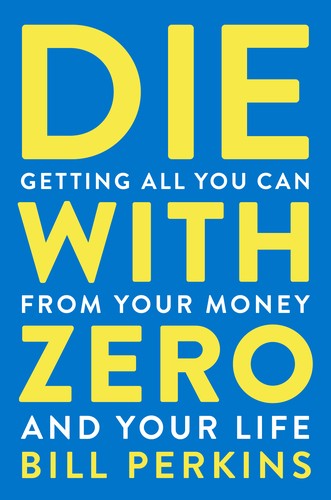
Cover of Die With Zero by Bill Perkins

Die With Zero

by Bill Perkins · 2020

The necessary counterweight to a shelf of books about accumulation: money buys experiences that are worth most at a particular age. Provocative, and a useful check on reflexive frugality.

Core idea
Experiences have an expiry date, so the optimal savings rate is not the highest one.
Read it if
You save compulsively and never spend any of it.
Skip it if
You have no savings yet — the argument doesn't apply to you.
Buy on AmazonHardcover · Kindle · Audiobook
“Doing well with money has little to do with how smart you are and a lot to do with how you behave.”
— Morgan Housel
How this list was made

What separates these from the rest of the shelf

Most wealth-building books are one insight stretched to 250 pages, and most of those insights are about income. These five are about retention and time instead, which is where the arithmetic actually lives. Stanley and Robin supply the evidence, Clason supplies the habit, Richards supplies the diagnosis of self-sabotage, and Perkins is included specifically to argue against the other four — a list that only tells you to save is incomplete advice about a finite life.

Where should I start if I only read one?

The Millionaire Next Door if you want evidence, Your Money or Your Life if you want your habits to change. They aim at the same conclusion from opposite directions.

Is Rich Dad Poor Dad missing on purpose?

Yes. Its core distinction between assets and liabilities is useful, but too much of the surrounding advice is unverifiable or actively risky, and the accounting is loose. Better arguments exist in every book listed above.

Do these books work outside the United States?

The principles do; the tax and account specifics do not. Robin and Sethi are the most US-specific. Read them for structure and substitute your own country's tax-advantaged accounts.

How much income do I need before these are useful?

Enough to save something consistently, even a small amount. Below that, the debt list is the more useful starting point, since clearing a balance is the highest guaranteed return available to you.

Explore This Topic Further

Back to This List →

More Reading Lists

View All Lists →

One list. One book. Every two weeks.

A short, opinionated email — no filler, no fifty-book roundups. Just what's worth reading next.

As an Amazon Associate and Bookshop.org affiliate, we earn from qualifying purchases.